
Building Community Is the Mission
Jul 21, 2026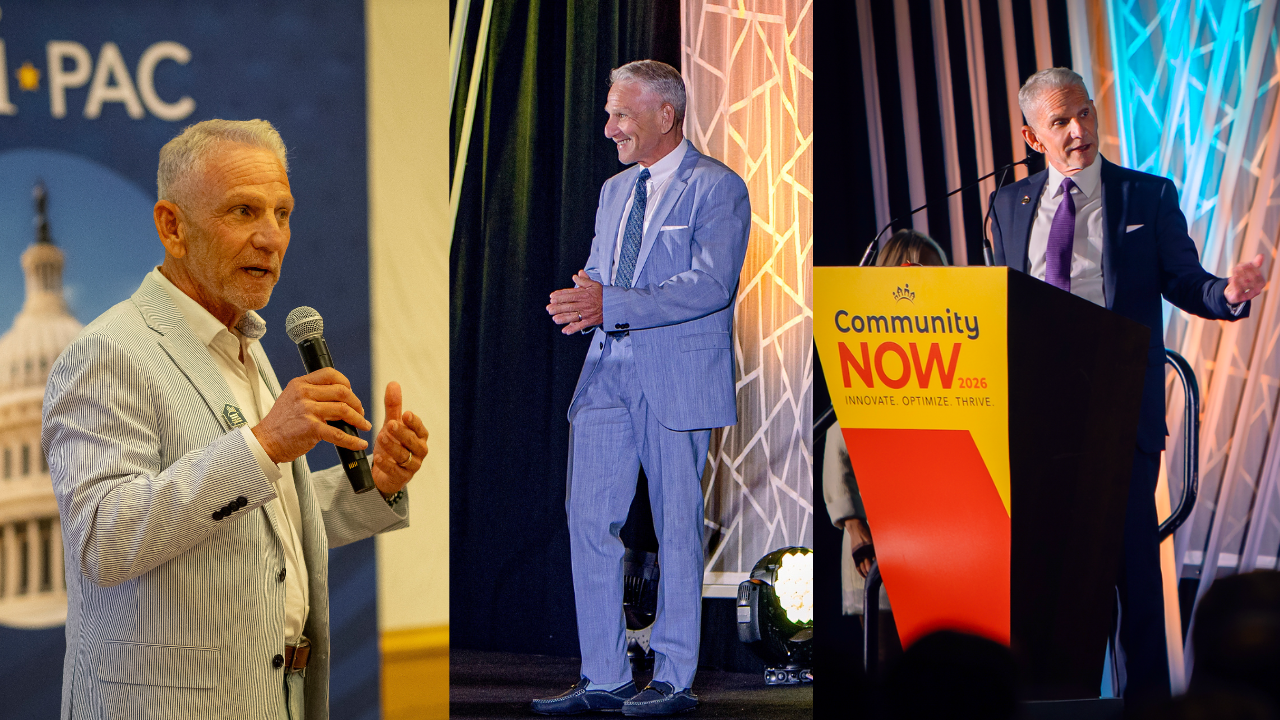
Reflections from CAI President Matt Ober, Esq., CCAL, at the 2026 CAI Annual Conference
When my wife Stacy and I purchased our first home together in 1987, we were newly married, raising a newborn, and eager to achieve the dream of homeownership. We bought a condominium in a newly developed Southern California community and immediately envisioned ways to make it our own.
Our first improvement seemed simple enough: replacing a patio sliding door with French doors. The answer from the association was equally simple—and firm.
No.
We didn't understand. Our home backed to a hillside. No one could see the change. What difference could it possibly make?
We pushed for an exception. Then we pushed some more.
The answer never changed.
Soon afterward, we attended our first board meeting. We arrived optimistic and curious, eager to learn how our community operated. Instead, we witnessed a contentious meeting filled with interruptions, raised voices, frustration, and conflict. Board members and the association's attorney spent much of the meeting shutting down disputes and restoring order.
As we left that evening, Stacy and I looked at each other and agreed:
"Never again."
Our early experience with community association living was not particularly inspiring. We encountered restrictions, enforcement, and very little meaningful communication from community leadership. Yet despite those frustrations, there was something about that neighborhood that kept us invested.
It was the people.
We knew our neighbors. We gathered at the community pool during the summer. We checked in on one another and built friendships. There was a sense of belonging and connection that made the experience worthwhile.
Despite the rules, despite the enforcement, and despite that memorable board meeting, we were a community.
And that distinction has stayed with me throughout my career.
The Challenge Facing Communities Today
It's easy to assume that community associations have become more contentious over the years. Certainly, many professionals, volunteer leaders, and homeowners would agree that interactions can feel more difficult than ever.
But perhaps the real challenge is not that people have changed. The challenge is that society has changed.
Today's residents live in a world shaped by social media, instant communication, and constant information. Platforms such as Facebook and Nextdoor have become the modern town square. At the same time, many people know less about their neighbors than previous generations did.
Harvard political scientist Robert Putnam explored this phenomenon in his landmark book Bowling Alone, documenting America's growing disconnection from neighbors, civic organizations, and community institutions. More recent studies suggest the trend continues, with Americans spending more time at home while becoming increasingly disconnected from the people living around them.
Community associations experience these realities every day. Recruiting volunteers can be difficult. Committees struggle to find participants. Achieving quorum often feels like a challenge.
Yet there is also encouraging news.
Year after year, homeowner surveys continue to show strong resident satisfaction, positive relationships among neighbors, and confidence in community governance. Residents consistently express a desire for engagement and connection.
The solution to disconnection, it turns out, is community itself.
A Personal Reminder of What Matters Most
In January 2025, my understanding of community took on an entirely new meaning.
My family lost our home in the Los Angeles wildfires.
One day we had a home, memories, and the possessions accumulated over a lifetime. The next day, we were living out of a motel room with only the belongings we had managed to carry with us.
Photographs. Family heirlooms. Keepsakes that marked life's milestones. Gone.
Our neighborhood. Gone.
Our community. Gone.
Or so I thought.
As we moved between temporary living arrangements, something remarkable happened.
Boxes of household supplies appeared at my office. Meals arrived at our doorstep. Friends, colleagues, neighbors, and even people we barely knew reached out to help. Some simply asked what we needed. Others stepped in without being asked.
At a time when everything familiar had disappeared, those acts of kindness reminded us that community was still very much alive.
The buildings were gone.
The people were not.
And that experience reinforced a lesson I had spent years observing in community associations across the country:
Community is not defined by structures, amenities, or governing documents.
Community is defined by people.
It is the relationships we build, the support we provide one another, and the sense of belonging we create together.
Building Community Through Our Work
One observation from community association professional Lisa Turner captures this idea perfectly:
"Every call, every email, every walk-through with a homeowner is a chance to set the temperature in the room. People remember how you made them feel long after they forget what the covenant said. The work is technical. The job is human."
Whether you are a community manager, volunteer leader, attorney, business partner, or homeowner, your work ultimately centers on people.
Every interaction presents an opportunity to strengthen trust, create connection, and improve the experience of living in a community.
The work may involve governance, maintenance, finances, or compliance, but its purpose is fundamentally human.
We are all in the people business.
And because of that, we all play a role in building community.
The Role of Civility
Any discussion about community must also include civility.
Too often, conversations about community associations focus on conflict. We hear stories about enforcement actions, contentious meetings, and disagreements among neighbors.
Conflict will always exist. Communities bring together individuals with different priorities, perspectives, and expectations.
But healthy communities are not defined by the absence of disagreement. They are defined by how people choose to navigate those disagreements.
Respecting those with whom we disagree is not weakness. It is the foundation of a community worth belonging to.
Civility means recognizing that every homeowner, board member, manager, and professional shares a common interest in the success of the community. It means listening before responding. It means engaging thoughtfully, disagreeing respectfully, and remaining committed to finding solutions.
We do not have to agree on everything.
But if we hope to build stronger communities, we must work to understand one another.
Our Collective Responsibility
The challenges facing communities today are real. Residents often feel disconnected, unheard, and isolated. Yet community associations occupy a unique position in modern society.
Few organizations engage people where they live.
Few organizations have the opportunity to create meaningful connections among neighbors.
Few organizations can influence how people feel about their homes and their communities in the same way.
That is why building community is not simply an aspiration.
It is our mission.
As professionals, volunteer leaders, and advocates, we have an opportunity—and a responsibility—to create communities where people feel connected, supported, heard, and valued.
The future of our industry will not be defined solely by how well we govern communities.
It will be defined by how well we help people belong to them.
Because community is more than a place.
It is the people who make that place feel like home.


